Water quality for high-pressure cleaners: what operators need to know
Water quality protects your machine and extends service life.
Good water quality is a key factor for reliable high-pressure water jetting. For DYNAJET machines, the supplied water should ideally be drinking-water quality, low in air content and with as few suspended particles as possible. Water from open sources, seawater and fully desalinated water are not suitable as supply water. The same applies to process water if it does not meet the required quality.
This topic is especially relevant for professional operators who depend on stable performance and low wear in demanding daily operation. Dirt particles, air in the line and unsuitable water quality can all increase stress on components and reduce service life. If the local water supply is hard, regular descaling is essential. That is not only a maintenance task, but also a practical measure to keep cleaning results consistent and protect the equipment.
The supply line itself also has a direct influence on machine protection. Large diameter inlet hoses, short hose runs and as few valves, ball valves and T-pieces as possible help maintain a suitable flow. DYNAJET also recommends an upstream pressure of no less than 2 bar and no more than 6 bar. When the machine is not in use, the water supply should be shut off. These measures support reliable operation and reduce unnecessary strain on the system.
Suspended particles and water hardness are easy to assess in practice. A simple glass test can show whether particles settle at the bottom after a few hours. That matters because floating particles act like fine abrasive material and accelerate wear, especially when working with high pressure. Water hardness should be checked through the local supplier, by self-analysis or in a laboratory. For the exact permitted values, always follow the water quality requirements in the operating instructions for the relevant DYNAJET machine.
Read more about Protect Your High-Pressure Cleaner from Frost in Winter and how to prevent calcification and descale your high-pressure water jetting system correctly.
How suspended particles increase wear in practice
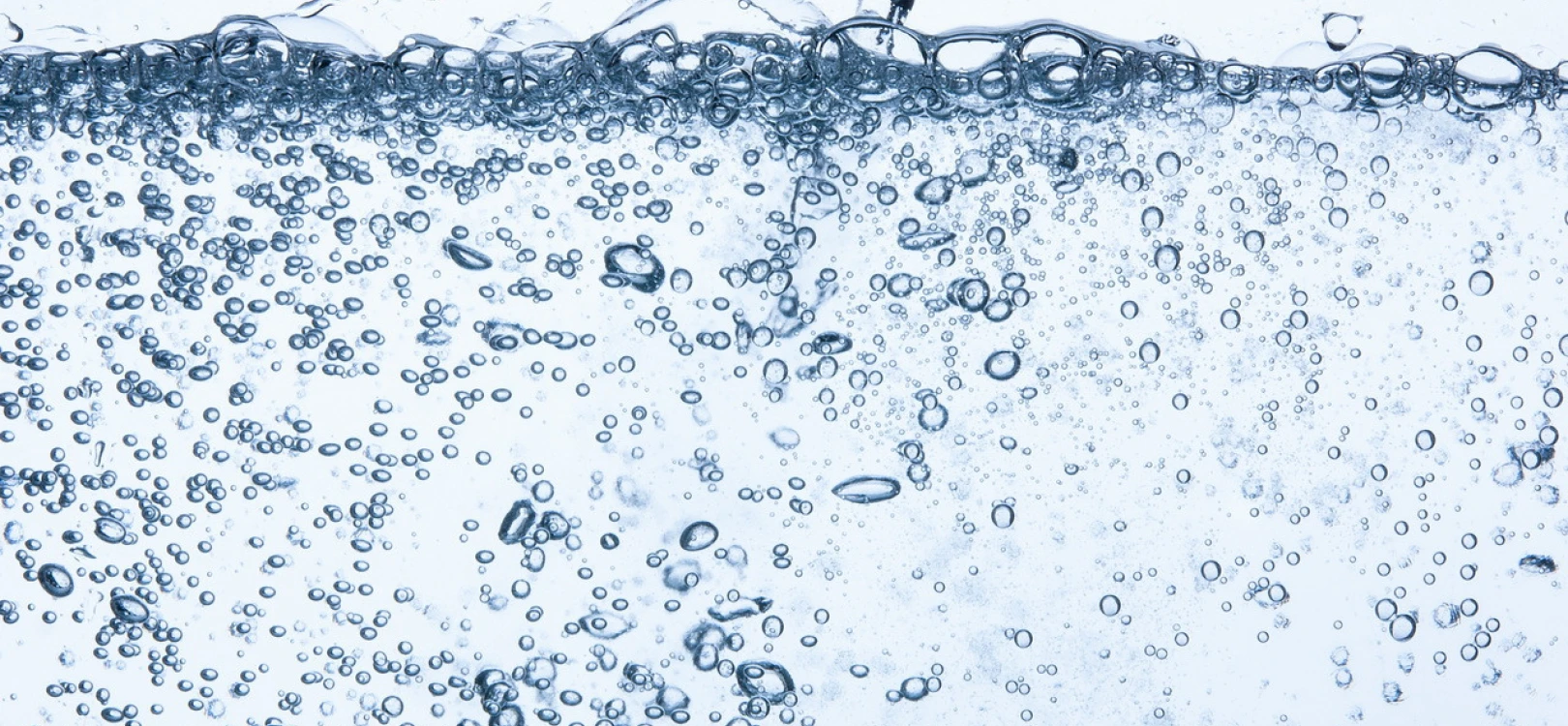
Let a water sample stand in a glass for a few hours. If particles settle, the water can cause extra wear, much like fine abrasive grit in the system.
Water hardness limits for DYNAJET cleaning systems
Soft and hard water are defined by calcium carbonate content. DYNAJET specifies hardness limits by pressure range in the operating instructions.
Need sizing guidance for pressure, flow rate, or power connection?